What Are the Standard Door Sizes for a Lynnwood Home?
A short guide to the door sizes you will run into, how to measure what you have, and what to do when your opening doesn't match any of them.
What are the standard door sizes?
The most common front door is 36 inches wide by 80 inches tall and 1 3/4 inches thick. Exterior doors also come in 30, 32 and 34 inch widths, and taller 84 or 96 inch doors are available. Sliding patio doors usually run 60, 72 or 96 inches wide. For a free quote, reach us at (425) 549-7282.
Standard entry door sizes
Most front doors on homes around Lynnwood are 36 by 80 inches, often called a 3-0 by 6-8 door in the trade. That size fits furniture through comfortably and meets the usual building code minimum for a main exit door. Side and garage entry doors are often narrower, at 32 or 34 inches.
Exterior doors are thicker than interior ones, typically 1 3/4 inches, so they can hold a deadbolt, weatherstripping and an insulated core. If a door feels light and hollow when you knock on it, there is a good chance it is an interior door that ended up in an exterior opening, which happens more often than you would think in older homes.
Taller doors at 84 inches (7 feet) or 96 inches (8 feet) show up in newer homes with high ceilings. Double entry doors are usually two 30 or 36 inch doors side by side, so the full unit runs about 60 to 72 inches wide before the frame.
- Most common front door: 36 x 80 inches
- Other exterior widths: 30, 32 and 34 inches
- Taller options: 84 and 96 inches
- Exterior door thickness: 1 3/4 inches
- Interior door thickness: usually 1 3/8 inches
Patio and storm door sizes
Sliding patio doors are measured as a whole unit. The common widths are 60 inches (a five-foot slider), 72 inches (a six-foot slider) and 96 inches for a three-panel or wide two-panel door, with 80 inches as the usual height. Hinged French doors come in similar overall widths, built from two narrower doors that meet in the middle.
Storm doors are sized to fit over an existing entry door, so they follow the same widths: 32, 34 and 36 inches, usually about 80 or 81 inches tall. Many storm doors have an adjustable expander strip along the bottom that takes up small differences in height. That flexibility helps, but it can't fix an opening that is out of square, which is something we check before recommending one.
How to measure the door you have now
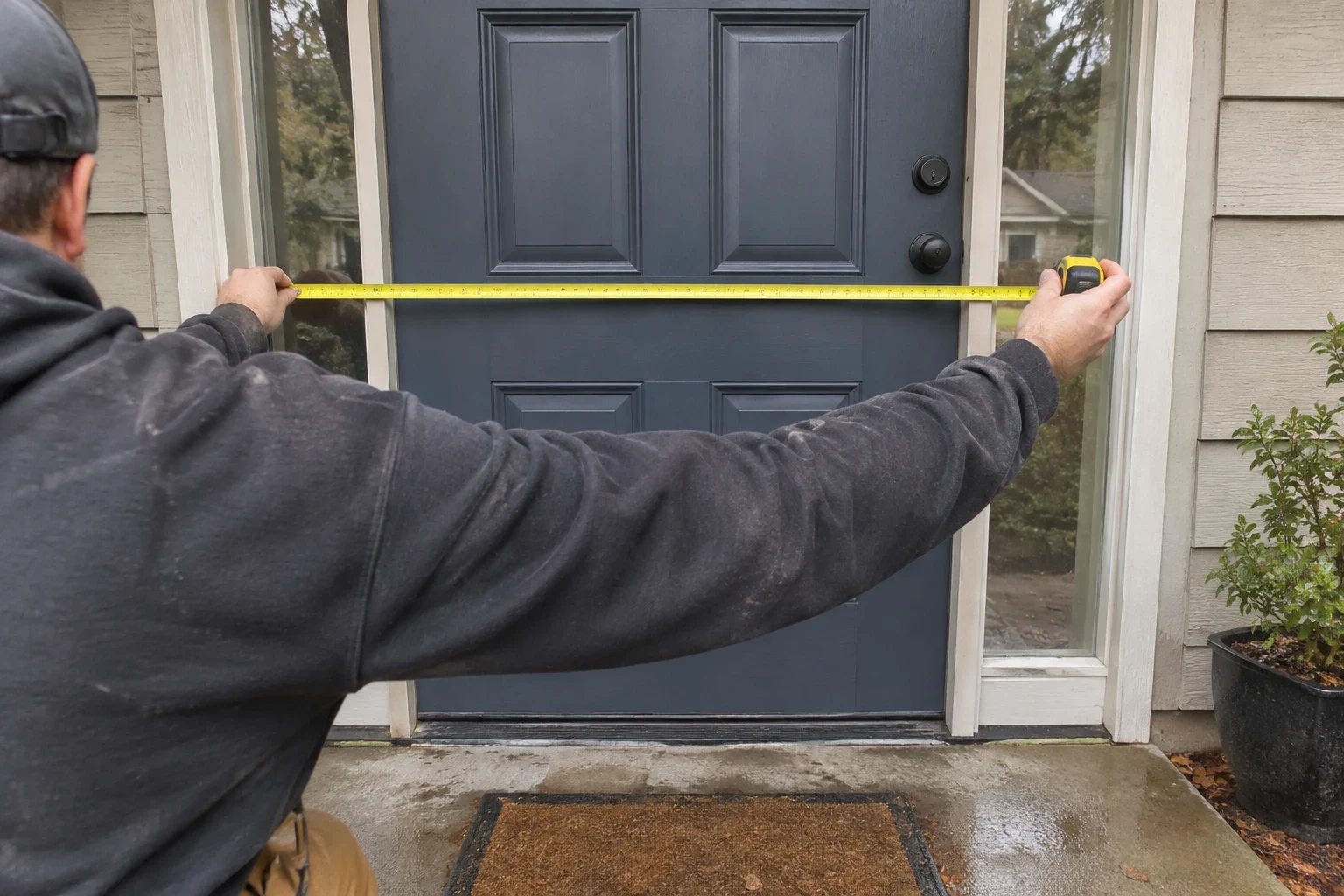
Start with the door itself, not the trim. Measure the width of the door slab from edge to edge and the height from top to bottom, then check the thickness on the edge. Write the numbers down in inches, because a quarter inch matters when ordering.
Next, look at the frame. Jamb depth is the measurement across the edge of the frame from the inside wall to the outside wall, and it tells you how thick the wall is. Walls framed with 2x4 lumber usually take a 4 9/16 inch jamb, while 2x6 walls take about 6 9/16 inches. A new prehung door with the wrong jamb depth leaves gaps you will have to fill with extra trim.
Finally, note which way the door swings and which side the hinges are on, standing outside looking in. These details all end up on the order, so we put them in writing on your quote before anything is ordered. You can see exactly what size, swing and jamb we plan to install.
- Slab width and height, in inches
- Door thickness
- Jamb depth (wall thickness)
- Swing direction and hinge side
- Any rot or soft wood at the sill or bottom of the frame
What if your door isn't a standard size?
Plenty of houses built decades ago have openings that drift from today's standards. Settling, past remodels and homemade frames can leave you with a 35 inch opening or a door that was trimmed down to fit. In the Puget Sound damp, wood frames can also swell or soften at the bottom, which changes the real size of the opening.
You have three honest choices. We can install a standard door and adjust the opening with new framing or trim, order a custom-size door built to fit, or in some cases resize the opening itself. Making an opening wider usually means a new header above the door and, in most cases, a building permit through the city, so it adds time and cost. We explain which option fits your door and why in the written quote, so there are no add-ons that show up halfway through the job.
What affects the cost of a new door
Size is only one piece of it. A standard 36 by 80 inch door is usually the easiest and fastest to source, while taller, wider or custom doors cost more and can take longer to arrive. Material matters too: fiberglass and steel hold up well against wet winters, while wood needs more upkeep.
The condition of the frame and sill also moves the price. If we pull the old door and find rot underneath, that repair has to happen before the new door goes in, and we show you photos and talk it through before doing any extra work. Glass panels, sidelights, hardware and finish choices round out the rest. Most installs are finished in a single day, and we offer flexible payment options.
- Door size and whether it is standard or custom
- Material: fiberglass, steel or wood
- Glass, sidelights and decorative panels
- Frame and sill condition
- Any framing changes or permits
More questions about door sizes
Is the rough opening the same as the door size?
No. The rough opening is the framed hole in the wall, and it is usually about 2 inches wider and 2 1/2 inches taller than the door itself. That extra room leaves space for the frame, shims and insulation.
Do I need a 36 inch front door?
Not always, but it is the most practical size for moving furniture and for anyone using a walker or wheelchair. Code generally calls for at least one exit door with a clear opening of 32 inches or more, and a 36 inch door covers that easily.
Can I put a bigger front door in my existing opening?
Only if the opening is already large enough, or if the wall is reframed. Going wider usually means a new header and a permit, which we can explain and price for you before you decide.
Will a standard storm door fit my front door?
If your entry door is a standard 32, 34 or 36 inch width and the frame is square, a standard storm door usually fits. We measure first so you know before ordering.
Not sure what size door you need?
Give us a call and we will set up a time to measure your door and frame. You get a free, no-pressure quote in writing that lists the size, materials and any frame work, so you know the full scope before we start.